
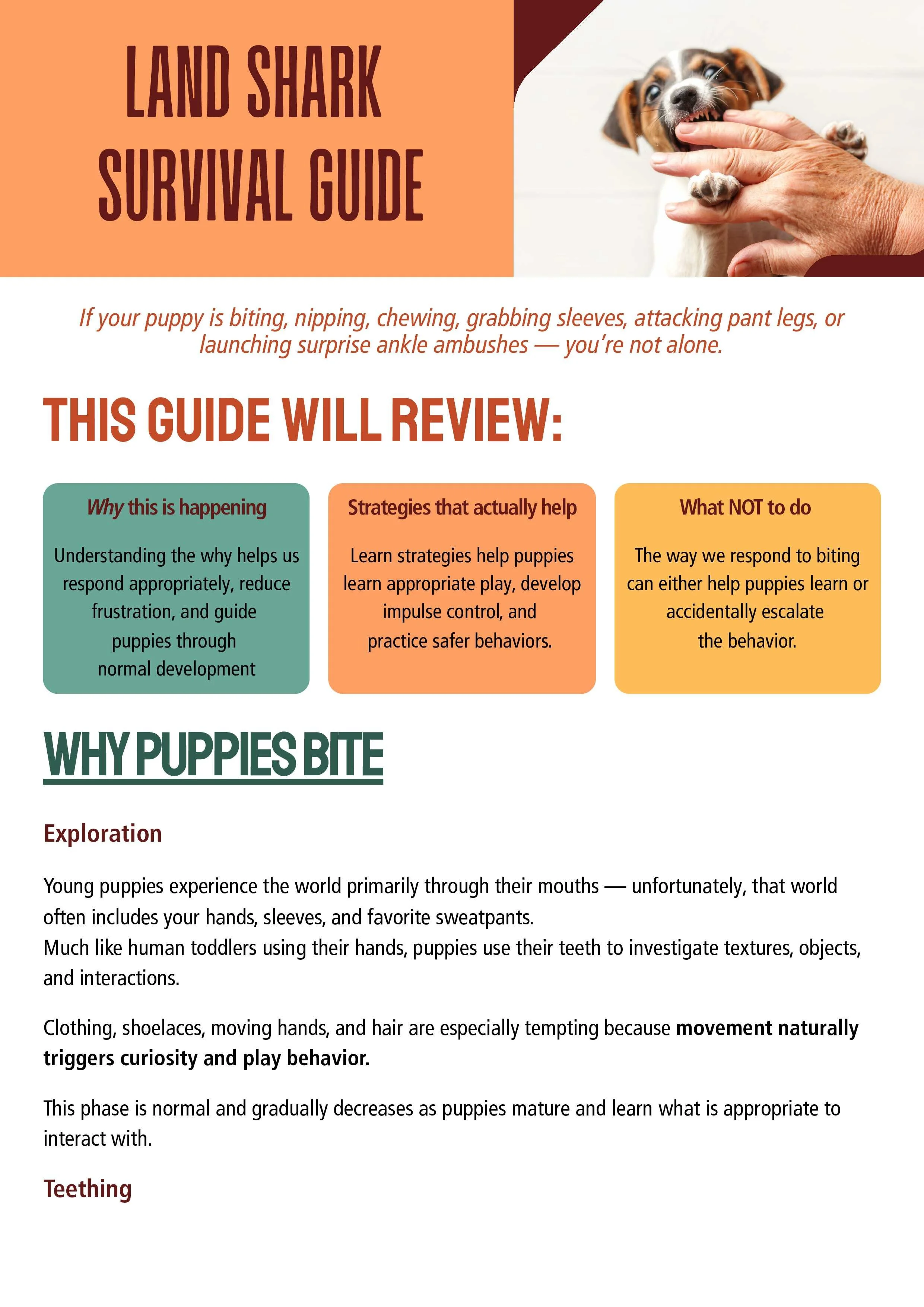
Puppy Biting:
Why It Happens and What Actually Helps
Most puppy biting comes from completely normal developmental stages. Puppies commonly bite because they are:
• exploring the world with their mouths
• relieving discomfort during teething
• attempting to play the way they would with other puppies
• becoming overstimulated or overtired
• trying to initiate interaction or attention
When excitement gets too high, puppies can lose the ability to make good choices and may start grabbing clothing, jumping, or biting more intensely. Often what looks like “bad behavior” is simply a young nervous system that needs rest, guidance, or appropriate outlets.
Why Puppies Bite
Strategies That Actually Help
Helping puppies develop appropriate play and chewing habits usually involves a combination of management, redirection, and meeting their biological needs.
Helpful strategies include:
• redirecting biting toward appropriate toys or chews
• keeping toys easily accessible during play
• providing plenty of appropriate chewing outlets during teething
• recognizing signs of overstimulation early
• ensuring puppies get adequate rest throughout the day
Many puppies also benefit from structured rest and predictable routines. When puppies are well-rested and their needs are met, biting often decreases significantly.
Need More Help With Your Puppy?
Need more hands-on help with puppyhood? Explore my puppy training programs in Tampa.
My puppy and adolescent training programs focus on helping young dogs build appropriate outlets, impulse control, and real-world skills while supporting their natural development.