
Why Dog Parks Can Actually Hurt Socialization
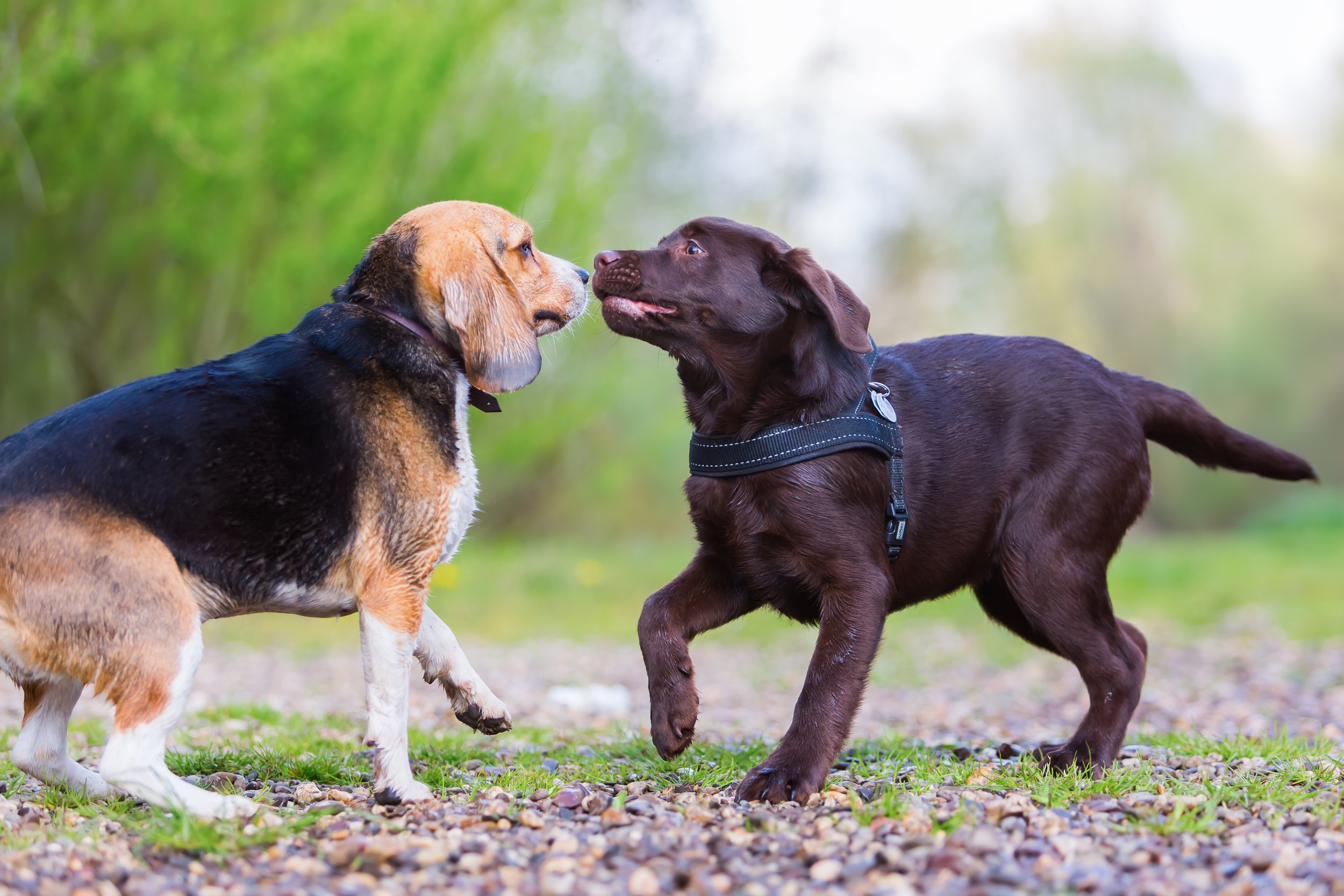
One of the most common things I hear from puppy and adolescent dog owners is:
"We've been taking him to the dog park to socialize him."
And honestly, I understand the logic. If socialization is important and dog parks are full of dogs, it seems like a pretty reasonable conclusion.
The problem is that socialization and interaction are not the same thing.
Somewhere along the way, we collectively decided that socialization meant meeting as many dogs, people, children, and distractions as possible. The more interactions, the better. But that's not actually the goal. The goal of puppy socialization is not to create a dog who wants to interact with everything they encounter. It's to create a dog who can comfortably and confidently exist around the world.
A well-socialized puppy doesn't need to greet every dog they see. They don't need to say hello to every stranger or investigate every passing distraction. Ideally, they learn that most things are simply part of the environment and not particularly important.
This is where dog parks can become problematic.
Dog Parks Teach The Opposite Of Neutrality
Think about what happens every time a puppy enters a dog park. They see a dog and immediately run toward it. Then they see another dog and run toward that one. Every interaction reinforces the idea that other dogs are the most exciting and important thing in the environment.
The problem is that most of life doesn't work this way.
Most of life involves seeing dogs without interacting with them. We pass dogs on neighborhood walks. We encounter them at parks, breweries, outdoor shopping centers, veterinary clinics, and trailheads. If every dog your puppy sees predicts access and interaction, or the main activity away from home is the dog park, it's not unusual for frustration to develop when that access suddenly isn't available in other contexts.
In fact, some of the most reactive dogs I've worked with weren't fearful of other dogs at all. They loved them. They had simply spent months or years learning that seeing a dog meant greeting a dog. When that expectation wasn't met, frustration showed up as barking, lunging, and pulling.
That's one reason I care so much more about teaching neutrality than I do about teaching puppies to make friends with every dog they encounter.
Dog Parks Are An Awful Lot Of Trust
The other challenge is that dog parks ask us to place a tremendous amount of trust in complete strangers.
We're trusting that the dogs attending are healthy. We're trusting that they're vaccinated. We're trusting that they're comfortable around puppies and have appropriate social skills. We're trusting that their owners are paying attention and will intervene if necessary.
The reality is that we have no way of verifying any of those things.
Every owner believes their dog is friendly. Every owner believes their dog plays appropriately. Every owner believes their dog belongs at the dog park. Unfortunately, those beliefs don't always match reality.
That's not meant to villainize anyone. Most people genuinely have good intentions. But good intentions don't change the fact that dog parks are one of the few places where we routinely put large numbers of unfamiliar dogs together and hope everyone makes good decisions.
Sometimes they do.
Sometimes they don't.
And when we're talking about puppies during critical developmental periods, that's a gamble I'm generally not interested in taking.
A puppy doesn't need to be attacked to have a negative experience. Being repeatedly overwhelmed, chased, cornered, bowled over by larger dogs, or trapped in interactions they don't know how to navigate can leave a lasting impression as well.
What I'd Rather See Instead
Honestly, I'd rather see a puppy sitting on a bench.
I'd rather see them observing dogs from a distance, watching children ride bicycles, listening to traffic, exploring a new trail, or relaxing outside a coffee shop. I'd rather see them learning that exciting things can exist without requiring participation.
Socialization should be less about participation and more about observation. Less about making friends and more about building confidence. Less about interaction and more about helping puppies learn that the world can simply exist around them.
Some adult dogs genuinely enjoy dog parks, and some navigate them beautifully and are resilient enough to handle the potential risks. But if your primary goal is puppy socialization, there are often far more effective ways to spend your time.
Because the goal isn't raising a dog who wants to interact with everything. It's raising a dog who can comfortably exist around anything. If you want to learn more about safe puppy socialization practices be sure to check out my FREE Survival Guide.
