
How to Stop Your Dog From Jumping
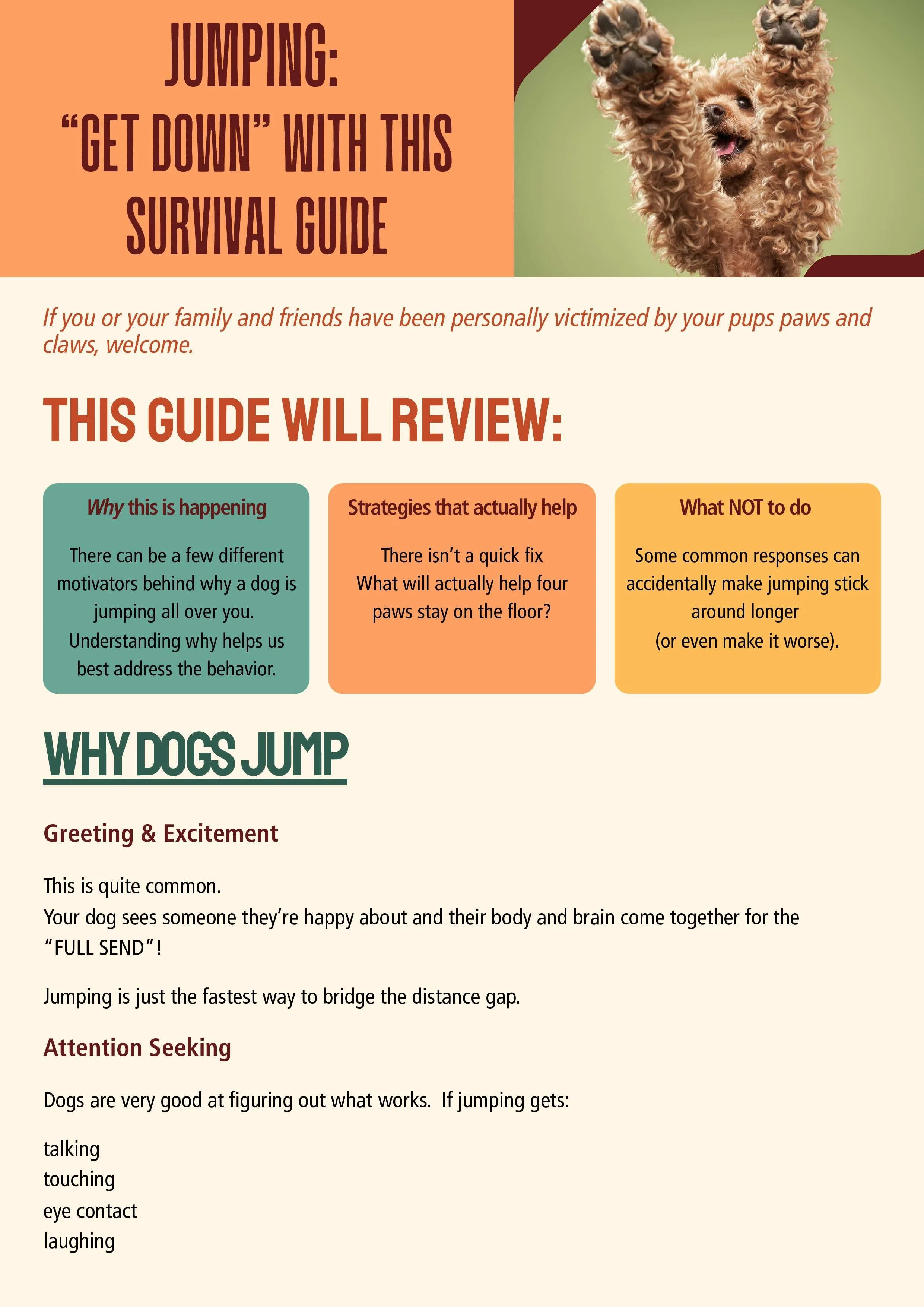
Why This is Happening
Jumping isn’t random — it’s doing something for your dog.
Most often, it shows up during greetings and excitement. Your dog sees someone they’re happy about and goes all in, using their body to close the distance as quickly as possible. For others, it becomes a learned strategy for attention. If jumping gets talking, touching, eye contact, or any kind of reaction — it works.
Sometimes it’s also tied to energy. Puppies and adolescent dogs, especially, have a lot happening in their bodies without a lot of regulation yet. Jumping becomes an easy outlet.
And in some cases, it can be rooted in uncertainty — which is why paying attention to context and body language matters.
Understanding what’s driving the behavior is what allows us to actually shift it.
What Actually Helps
There isn’t a quick fix — but there is a clear path forward.
First, we prevent the practice. The more your dog rehearses jumping, the better they get at it. Using things like leashes, gates, space, and structured greetings makes a big difference right away.
From there, we shift the focus away from “stop jumping” and toward what we do want to see.
That might look like:
four paws on the floor
leaning into your legs
grabbing a toy
pausing, even briefly
Those small moments are where learning happens.
Then we make those choices worth it. Attention, interaction, and reinforcement happen when your dog is grounded — not while they’re mid-air.
We also build this skill outside of real-life chaos. Practicing greetings, arrivals, and interactions in lower-pressure setups gives your dog a chance to get it right before we expect it in real situations.
And finally, we zoom out.
Dogs who are under-exercised, under-enriched, overstimulated, or overtired are far more likely to default to jumping. Meeting their needs doesn’t replace training — but it makes everything easier.
Need More Help With Your Pup?
Need more hands-on help with puppyhood? Explore my puppy training programs in Tampa.
My puppy and adolescent training programs focus on helping young dogs build appropriate outlets, impulse control, and real-world skills while supporting their natural development.